Monday, March 18, 2013
Jibberwillies at Night by Rachel Vail
Illustrated by Yumi Heo. 32 p., Scholastic, 2008.
Even for a happy kid like Katie, sometimes the Jibberwillies come at night. Katie is a competent child, and when that happens, she knows what to do. First, she whispers "go away." But they don't. So next, she tries thinking about nice things. But the Jibberwillies are still there. Having tried to solve the problem on her own, next, she calls her mother. Gentle and wise, her mother offers her a bucket to catch the Jibberwillies. But they're too fast and too slippery, and Katie can't catch them. She's discouraged and hopeless. But her mother has a plan. If Katie will say the Jibberwillies out loud, her mother will catch them in the bucket - and, since Katie suggests this, will throw them out the window. When they do this, Katie can sleep again. Exuberantly illustrated, this story shows kids that by using your creativity, and getting help when you need it, it's possible to feel safe even on scary nights.
Ages 4-8

Monday, March 11, 2013
Nikolai, the Only Bear by Barbara M. Joosse
Illustrated by Renata Liwska
32 p., Philomel, 2005.
Nikolai is the only bear in a Russian orphanage. Although he does what his caregivers ask, they don't realize this because they don't speak Bear. Eventually, a bearded man and a smooth-faced woman come to visit him. Nikolai seems to know instinctively that the "fur-faced" man is like him. The visitors seem to understand him too: instead of correcting Nikolai the way his caregivers do, they join him, growling in response to his growls, prowling on the floor with him, pawing the air when Nikolai does. Having found a family where he belongs, Nikolai goes home with them to America. This gently illustrated story celebrates the experience of belonging that comes with adoption.
Ages 3-7
Monday, March 4, 2013
Guess Who, Baby Duck! by Amy Hest
Illustrated by Jill Barton. 32 p., Candlewick, 2004.
Sometimes when you don't feel well, it might feel better to remember happier times. When Baby Duck has a cold, her Grampa shows her pictures of herself when she was much younger. She enjoys the pictures, and feels inspired. As she starts to feel a little better, she draws Grampa a picture that he likes - a picture of him, and his loving care for her. Colorfully illustrated, this story offers children empathy with feeling under the weather, along with a way to feel a better.
Ages 3-6
Monday, February 25, 2013
Scribbleville by Peter Holwitz
Illustrated by 40 p., Philomel, 2005.
Although people are often uncomfortable with others who seem different from themselves, they can learn to appreciate diversity. This is the story of the town of Scribbleville, where everyone is scribbled, even the dogs and cats. One day, a stick-straight man arrives and builds himself a perfectly straight house. Most of the scribble people shake their heads and talk about how the stranger doesn't belong. They worry that more straight people might move to town, and then "there'll be more of them than there are of us!" But one scribbled woman becomes the stranger's friend. As she says to another friend, "on the outside he's odd, but that's not where I look." Belying the other townspeople's "us vs. them" mentality, she becomes a little straighter, and he becomes a little more scribbly. A similar kind of change appears in others in Scribbleville, starting with its children. The (former) stranger and the woman marry. And the entire appearance of Scribbleville changes. It has become a place where "whoever you are, you'll fit in well." This delightfully-illustrated rhyming story conveys a positive message about the value of diversity and hope for change.
Ages 4-8
Tuesday, February 12, 2013
Tissue, Please! by Lisa Kopelke
32 p., Simon, 2004.
When you have a cold, it's important to learn to use tissues. Unfortunately for Frog and his friends, although both their classroom teacher and and their ballet teacher object to their sniffling and wiping their noses on their arms, neither offers an alternative. But Frog's parents have the answer: when he starts to sniffle in the middle of dinner, his father explains that that isn't polite and the table, and his mother gives him tissues. Frog discovers that when he blows his nose into a tissue, it feels great. So when his nose begins to run during his big ballet recital, one look from his teacher is all that it takes for him to remember to get a tissue. He incorporates blowing his nose into his dance move, inspiring his class. Both his teacher and the audience are pleased - and this begins a tradition of performing the "dance of the Tissue-Box Fairies." With its edgy, acrylic illustrations, this story may help make appropriate nose-blowing attractive to children.
Ages 3-6
Monday, February 11, 2013
Flabbersmashed About You by Rachel Vail
Illustrated by Yumi Heo.32 p., Macmillan, 2012.
It can be hurtful when your best friend wants to play with someone else. Katie has this experience when her best friend, Jennifer, would rather chase imaginary bad guys with Roy at recess than make imaginary soup with her. Katie feels lonely, hurt, angry, and "completely flabbersmashed." The children have to walk inside from recess with one buddy each, and Jennifer chooses Roy. But a quiet new girl, Arabella, chooses Katie.Katie feels accepted, and finds herself hopeful that she can have fun with Arabella. It's clear that this is a very different feeling from the lonely, angry, flabbersmashed feeling. The illustrations are energetic and evocative. This story offers children empathy for an important experience in their lives, and shows them that they can feel better.
Ages 4-8
Monday, February 4, 2013
Skin Again by bell hooks
Illustrated by Chris Raschka.32 p., Hyperion, 2004.
Our skin is only a small part of who we are. With eloquence and passion, this book tells us that in order to know one another, we have to look past skin, which, although it matters, is ultimately only a covering; and experience one another from the inside, with an open heart. We have to hear one another's stories of both the factual and the imagined. We have to see one another for who we really are, not who we expect one another to be. Vivid and dynamic, the illustrations show a range of skin tones, experiences of internal complexity, and connections between people. This books shows clearly how prejudice makes genuine connection impossible, and conversely, how genuine connection makes prejudice impossible.
Ages 5-9
Subscribe to:
Posts (Atom)
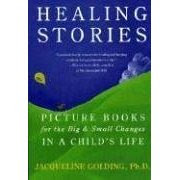
About the Author

- Jacqueline Golding, Ph.D.
- Jacqueline Golding, Ph.D. is a psychologist in private practice in Pleasanton, California who works with children, teens, and adults. A graduate of Yale University, Dr. Golding earned her Ph.D. in psychology at the University of California, Los Angeles and completed a post-doctoral fellowship at the Central Contra Costa County Child, Adolescent, and Family Mental Health Service in Concord, California. She holds an appointment as Professor Emeritus at the University of California, San Francisco and has published over 100 articles in scientific and professional journals on topics such as trauma, depression, and cultural issues in mental health. Dr. Golding is represented by the Levine Greenberg Literary Agency.