Showing posts with label security in relationship. Show all posts
Showing posts with label security in relationship. Show all posts
Monday, July 14, 2014
I Love You Through and Through by Bernadette Rossetti-Shustak
Illustrated by Caroline Jayne Church. 24p., Scholastic, 2005.
Here's a rhyming story that communicates being fully loved. The narrator loves everything about the character, inside and out, in all his moods, always. Cheerfully illustrated, this story celebrates the unconditional acceptance that parents and other special people feel for children.
Ages 0-3

Monday, January 14, 2013
Bearcub and Mama by Sharon Jennings
Illustrated by Mélanie Watt. 32 p., Kids Can, 2005.
Part of growing up is to move from having a parent literally with you to having that parent in your heart. Bearcub learns this as he grows. First, he always follows his mama. As he gets a little older, he starts to explore on his own. When he gets caught in a storm, he howls for Mama, but she doesn't find him. He realizes that he should go home, finds his scent, and follows his trail back to his den. Mama isn't there, but her scent comforts him, and he remembers that she'd told him that storms always pass. And in the morning, Mama has returned. Bearcub proudly tells her that he remembered that storms pass. Now he has her with him inside, in his memories and thoughts. Illustrated with tender acrylic paintings, this story helps children take love and security with them wherever they go.
Ages 3-6
Monday, December 31, 2012
The Hello, Goodbye Window by Norton Juster
Illustrated by Chris Raschka. 32 p., 2005.
Relationships with grandparents can be a special source of joy and security for children. In this story by the author of the absolutely wonderful children's novel The Phantom Tollbooth, a little girl has special times at her Nanna and Poppy's house. Their house has a Hello, Goodbye Window where the girl greets her grandparents when she arrives, looks for the pizza delivery person, and even expects the queen of England and tyrannosaurus rex. When it's time to go home, she blows goodbye kisses through the window. The girl shares memories with Nanna and eats Poppy's delicious breakfasts, draws pictures, enjoys Poppy's jokes, and helps Nanna in the garden. There are limits at Nanna and Poppy's house (the girl can ride her bike, but not in the street; she can collect sticks, but not bring them into the house) but these don't seem to bother the girl a bit. When Mommy and Daddy pick the girl up, she's happy to go home, but sad to leave her grandparents, and acknowledges this combination of feelings in an informative, matter-of-fact way. The girl plans to have a special Hello, Goodbye Window in her own house when she grows up to be a Nanna. The colorful, exuberant illustrations add to this story's delight. The Hello, Goodbye Window offers a sense of warmth, security, and fun, empathy with transitions, and acknowledgement of complicated emotions.
Ages 4-8
Monday, September 24, 2012
No Matter What by Debi Gliori
28 p., Harcourt, 1999.
Children sometimes feel unloved when they're grumpy, and need reassurance. Such is the case with Small, a little fox. Large notices Small's irritability and asks what's wrong, and Small explains, "I'm grim and grumpy ... and I don't think you love me at all." Large explains that s/he always loves Small, and Small asks some charmingly rhymed questions to confirm this; for example, "But if I turned into a squishy bug,/would you still love me and give me a hug?" Large explains that love can be mended if that's needed, and is always with us, whether we're close together or far apart. The change in Small's mood, from cranky to calm, is clear in the watercolor and ink illustrations. With Small, children will feel soothed and secure.
Ages 2-5
Thursday, July 5, 2012
Grandpa Loves by Rebecca Kai Dotlich
Illustrated by Kathryn Brown. 26 p., HarperCollins, 2005.
Children and grandparents can have a unique bond. In this story, a little pig's grandpa loves to do lots of fun things through all the seasons, always with the little one. Illustrated with gentle watercolors, this story clearly conveys the feeling that Grandpa is a loving, special friend and companion to the little one, and the sense that the little pig feels lovable as a result. Children who have a special grandpa will join with the little pig in the feelings of security and happiness in this relationship.
Ages 4-6
Monday, April 30, 2012
What Did You Do Today? The First Day of School by Toby Forward
Illustrated by Carol Thompson.32 p., Clarion, 2004.
Even when children and parents are apart during the day, they're connected not only by thinking about each other, but by the similar elements in their days. In this story, it's a little boy's first day of preschool. The day starts with packing lunches - one for him, one for his mother. At school, the little boy hugs his mother and watches her as she disappears, and soon he's so busy that he forgets about missing her. On facing pages, we see the child's and the mother's similar experiences: greeting classmates (or colleagues), eating snacks and lunch, writing, even feeling sleepy. We see the mother thinking about the little boy on most of the pages, and the little boy thinking about his mother at lunchtime and when it's time to get ready to go home. They reunite joyfully, ready to hear about each other's day. With its warm, happy watercolor illustrations, this story offers reassurance and connection.
Ages 2-5
Even when children and parents are apart during the day, they're connected not only by thinking about each other, but by the similar elements in their days. In this story, it's a little boy's first day of preschool. The day starts with packing lunches - one for him, one for his mother. At school, the little boy hugs his mother and watches her as she disappears, and soon he's so busy that he forgets about missing her. On facing pages, we see the child's and the mother's similar experiences: greeting classmates (or colleagues), eating snacks and lunch, writing, even feeling sleepy. We see the mother thinking about the little boy on most of the pages, and the little boy thinking about his mother at lunchtime and when it's time to get ready to go home. They reunite joyfully, ready to hear about each other's day. With its warm, happy watercolor illustrations, this story offers reassurance and connection.
Ages 2-5
Monday, February 27, 2012
Little Raccoon's Big Question by Miriam Schlein
Illustrated by Ian Schoenherr.32 p., Greenwillow, 2004.
A little raccoon asks his mother when she loves him most. He guesses that she might love him most at times when he's adorable, or compliant, or plays well with other raccoon children, or shows his skills. Mother Raccoon explains that she loves him most now, because it's always now. This book is especially nice as a bedtime story, because it not only expresses a soothing message of unconditional love, but also ends with the little raccoon's bedtime.
Ages 3-7
A little raccoon asks his mother when she loves him most. He guesses that she might love him most at times when he's adorable, or compliant, or plays well with other raccoon children, or shows his skills. Mother Raccoon explains that she loves him most now, because it's always now. This book is especially nice as a bedtime story, because it not only expresses a soothing message of unconditional love, but also ends with the little raccoon's bedtime.
Ages 3-7
Monday, June 13, 2011
Mama's Day by Linda Ashman
Illustrated by Jan Ormerod. 32 p., Simon & Schuster, 2006.
Mamas everywhere love their babies all day long. In this sweet, rhyming story, Mamas begin their day by lifting their babies from their cribs, and care lovingly for the babies all day long. They play at the beach and in the garden, walk on city streets, and visit markets. As the end of the day nears, mamas bathe their babies, read them stories, rock them, and sing to them. The story ends with the reader's love for the child hearing the story. The pencil and wash illustrations give curious little ones much to look at and talk about, with a gentle level of stimulation that's appropriate for the youngest book lovers. Children will feel a sense of peace and security reading this book.
Ages 0-2
Cultural context: multicultural
Mamas everywhere love their babies all day long. In this sweet, rhyming story, Mamas begin their day by lifting their babies from their cribs, and care lovingly for the babies all day long. They play at the beach and in the garden, walk on city streets, and visit markets. As the end of the day nears, mamas bathe their babies, read them stories, rock them, and sing to them. The story ends with the reader's love for the child hearing the story. The pencil and wash illustrations give curious little ones much to look at and talk about, with a gentle level of stimulation that's appropriate for the youngest book lovers. Children will feel a sense of peace and security reading this book.
Ages 0-2
Cultural context: multicultural
Monday, April 11, 2011
Laney's Lost Momma by Diane Johnston Hamm
Illustrated by Sally G. Ward. 28 p., Whitman, 1991.
When Laney is lost in a department store, she finds her Momma by remembering what Momma has told her. Each one looks all over for the other, both worry. But they both remember that Momma has always told Laney that she should never leave a store without her, and Laney remembers that if she needs help, she should ask someone behind a counter. A salesperson pages "Laney's lost Momma" and they're happily reunited. Laney looks as if she's about 5 years old, although she tells the salesperson that her Momma's name is "Momma." This story shows a nice example of the value of keeping someone's words with you when they can't be with you in person.
Ages 4-6
Main character's cultural background: African American
Cultural context: multicultural
When Laney is lost in a department store, she finds her Momma by remembering what Momma has told her. Each one looks all over for the other, both worry. But they both remember that Momma has always told Laney that she should never leave a store without her, and Laney remembers that if she needs help, she should ask someone behind a counter. A salesperson pages "Laney's lost Momma" and they're happily reunited. Laney looks as if she's about 5 years old, although she tells the salesperson that her Momma's name is "Momma." This story shows a nice example of the value of keeping someone's words with you when they can't be with you in person.
Ages 4-6
Main character's cultural background: African American
Cultural context: multicultural
Monday, November 22, 2010
Come Along, Daisy! by Jane Simmons
32 p., Little, Brown, 1998.
Children need to find a balance between exploration and safety. In this story, Mama duck keeps telling Daisy to "come along," but the duckling doesn't listen; she is busy watching fish, chasing dragonflies, and playing with a frog. When she finds herself alone, she starts to see dangerous animals, and she needs her mother. Mama soon finds her, and she feels safe again. After that, Daisy finds a way to explore while staying close to her mother. Daisy's curiosity, fear, and relief are clearly illustrated in her facial expressions. This book will help children understand how to use their relationship with an adult to help them feel secure as they explore the world in a way that is both fun and developmentally necessary.
Ages 2-4
Main character's cultural background: non-human
Cultural context: non-human
Children need to find a balance between exploration and safety. In this story, Mama duck keeps telling Daisy to "come along," but the duckling doesn't listen; she is busy watching fish, chasing dragonflies, and playing with a frog. When she finds herself alone, she starts to see dangerous animals, and she needs her mother. Mama soon finds her, and she feels safe again. After that, Daisy finds a way to explore while staying close to her mother. Daisy's curiosity, fear, and relief are clearly illustrated in her facial expressions. This book will help children understand how to use their relationship with an adult to help them feel secure as they explore the world in a way that is both fun and developmentally necessary.
Ages 2-4
Main character's cultural background: non-human
Cultural context: non-human
Sunday, September 20, 2009
Dad and Me in the Morning by Patricia Lakin
Illustrated by Robert G. Steele. 32 p., Whitman, 1994.
Jacob, a child of about five who is deaf, gets up early with his father so they can watch the sun rise on the beach together. Jacob sees a rabbit, smells fragrant pine trees, and feels the sand, shells, and seaweed underfoot as he waits excitedly for the sun. He feels a sense of wonder as the day finally dawns. The closeness between Jacob and his Dad shows kids the joy and safety of sharing a special time with someone who understands them.
Ages: 4-8
Cultural Context: European American
Jacob, a child of about five who is deaf, gets up early with his father so they can watch the sun rise on the beach together. Jacob sees a rabbit, smells fragrant pine trees, and feels the sand, shells, and seaweed underfoot as he waits excitedly for the sun. He feels a sense of wonder as the day finally dawns. The closeness between Jacob and his Dad shows kids the joy and safety of sharing a special time with someone who understands them.
Ages: 4-8
Cultural Context: European American
Sunday, February 8, 2009
One More Time, Mama by Sue Alexander
Illustrated by David Soman. 32 p., Marshall Cavendish, 1999.
A little girl asks her mama to tell her about her pregnancy. Mama describes all the seasons of waiting for her daughter's birth as the two watch fireflies and walk home, and the girl goes to bed. As Mama tucks her daughter in, she tells her that it wasn't hard to wait because it was she that she was waiting for. Children will feel secure in the sense of closeness between mother and daughter.
Ages: 3-5
Cultural Context: European American
A little girl asks her mama to tell her about her pregnancy. Mama describes all the seasons of waiting for her daughter's birth as the two watch fireflies and walk home, and the girl goes to bed. As Mama tucks her daughter in, she tells her that it wasn't hard to wait because it was she that she was waiting for. Children will feel secure in the sense of closeness between mother and daughter.
Ages: 3-5
Cultural Context: European American
Sunday, February 3, 2008
Kiss Good Night by Amy Hest
Illustrated by Anita Jeram. 32 pages. Candlewick, 2001.
A secure relationship can be just what's needed in a scary situation. On a dark, stormy night, Mrs. Bear puts little bear Sam to bed. In what comes across as a regular, comforting ritual, she reads him his favorite story, tucks him in, gives him his stuffed animals, drinks a glass of milk with him, and finally gives him a goodnight kiss. In spite of pouring rain and howling wind outside, Sam goes to sleep, comfortable and cozy. This story shows children that a scary situation is not so scary when you face it with an adult who really knows what you need.
Ages: 0-4
Cultural Context: non-human
A secure relationship can be just what's needed in a scary situation. On a dark, stormy night, Mrs. Bear puts little bear Sam to bed. In what comes across as a regular, comforting ritual, she reads him his favorite story, tucks him in, gives him his stuffed animals, drinks a glass of milk with him, and finally gives him a goodnight kiss. In spite of pouring rain and howling wind outside, Sam goes to sleep, comfortable and cozy. This story shows children that a scary situation is not so scary when you face it with an adult who really knows what you need.
Ages: 0-4
Cultural Context: non-human
Sunday, December 31, 2006
The Way the Storm Stops by Michelle Meadows
Illustrated by Rosanne Litzinger. 32 pages. Holt, 2003.
A girl watches as it starts to rain, and as it rains harder and harder and thunder and lightning begin. This frightens the girl, who curls up under her covers. But Mommy comes and scoops her up, rocking her under a cozy blanket, and she can feel safe again. The storm begins to fade, and the girl can go to sleep. With its creative use of sounds and rhythm, this story reassures children about seeking comfort from a parent when they're scared.
Ages: 2-5
Cultural Context: African American
A girl watches as it starts to rain, and as it rains harder and harder and thunder and lightning begin. This frightens the girl, who curls up under her covers. But Mommy comes and scoops her up, rocking her under a cozy blanket, and she can feel safe again. The storm begins to fade, and the girl can go to sleep. With its creative use of sounds and rhythm, this story reassures children about seeking comfort from a parent when they're scared.
Ages: 2-5
Cultural Context: African American
Sunday, December 17, 2006
Mama, I'll Give You the World by Roni Schotter
Illustrated by S. Saelig Gallagher. 34 pages. Schwartz & Wade, 2006.
When a child can count on a parent's empathy and care, they can give each other the world. Luisa's single mother works hard as a hair stylist to save money for Luisa's college education - a way to give Luisa the world. Luisa comes to the salon after school and does her homework, and then entertains herself while Mama works. Mama seems sad in ways that Luisa is too young to understand. Luisa gives her mother a surprise birthday party that helps Mama to reconnect with her capacity for joy - and in doing this, she has given Mama the world. Using Luisa as an example, children will understand that their love is truly meaningful to people close to them.
Ages: 4-8
Cultural Context: multicultural
When a child can count on a parent's empathy and care, they can give each other the world. Luisa's single mother works hard as a hair stylist to save money for Luisa's college education - a way to give Luisa the world. Luisa comes to the salon after school and does her homework, and then entertains herself while Mama works. Mama seems sad in ways that Luisa is too young to understand. Luisa gives her mother a surprise birthday party that helps Mama to reconnect with her capacity for joy - and in doing this, she has given Mama the world. Using Luisa as an example, children will understand that their love is truly meaningful to people close to them.
Ages: 4-8
Cultural Context: multicultural
Sunday, December 10, 2006
No, David! by David Shannon
32 pages. Scholastic, 1998.
Rambunctious children often feel that their parents always seem to be saying No to them. In this story, David tracks mud across the living room floor, runs down the street naked, plays elaborately with his food, picks his nose, and plays baseball in the living room. Each time, his mom tells him No! But on the last page, she hugs him and tells him that she loves him. This book might help kids understand that their parents don't stop loving them when they say No. On a more subtle level, it might also help children separate their inappropriate behavior from who they are as individuals, which allows them to change their behavior and still be themselves.
Ages: 2-6
Cultural Context: European American
Rambunctious children often feel that their parents always seem to be saying No to them. In this story, David tracks mud across the living room floor, runs down the street naked, plays elaborately with his food, picks his nose, and plays baseball in the living room. Each time, his mom tells him No! But on the last page, she hugs him and tells him that she loves him. This book might help kids understand that their parents don't stop loving them when they say No. On a more subtle level, it might also help children separate their inappropriate behavior from who they are as individuals, which allows them to change their behavior and still be themselves.
Ages: 2-6
Cultural Context: European American
Sunday, October 29, 2006
Abuela by Arthur Dorros
Illustrated by Elisa Kleven. 40 pages. Dutton, 1991.
With an imagination and an Abuela (grandmother) who loves you, the sky's the limit. This delightful story takes place in the granddaughter's imagination, as she and her Abuela take off with the birds and fly all over New York City together. This flight reveals lots of the sights they've seen on real adventures they've had together, and in a particularly moving sequence mirroring their very close and special relationship, they briefly make a home in the clouds, where Abuela holds her granddaughter in her lap. The mixed-media illustrations are full of color and detail. This story shows the joy of sharing whatever is on your mind with someone who understands and cares for you.
Ages: 3-7
Cultural Context: multicultural
With an imagination and an Abuela (grandmother) who loves you, the sky's the limit. This delightful story takes place in the granddaughter's imagination, as she and her Abuela take off with the birds and fly all over New York City together. This flight reveals lots of the sights they've seen on real adventures they've had together, and in a particularly moving sequence mirroring their very close and special relationship, they briefly make a home in the clouds, where Abuela holds her granddaughter in her lap. The mixed-media illustrations are full of color and detail. This story shows the joy of sharing whatever is on your mind with someone who understands and cares for you.
Ages: 3-7
Cultural Context: multicultural
Subscribe to:
Posts (Atom)
About the Author

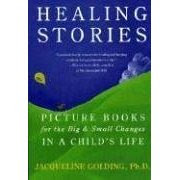
- Jacqueline Golding, Ph.D.
- Jacqueline Golding, Ph.D. is a psychologist in private practice in Pleasanton, California who works with children, teens, and adults. A graduate of Yale University, Dr. Golding earned her Ph.D. in psychology at the University of California, Los Angeles and completed a post-doctoral fellowship at the Central Contra Costa County Child, Adolescent, and Family Mental Health Service in Concord, California. She holds an appointment as Professor Emeritus at the University of California, San Francisco and has published over 100 articles in scientific and professional journals on topics such as trauma, depression, and cultural issues in mental health. Dr. Golding is represented by the Levine Greenberg Literary Agency.