Illustrated by Susan Covert. 40 pages. Verbal Images Press, 1996.
When kids have ADHD, they and others around them can see them as clumsy and annoying, and they may forget to do homework or to turn it in. Because of experiences like these, Ben feels bad about himself. His father takes him to Dr. Lawson, who explains that he has "Attention Deficit Disorder," which he describes as a chemical imbalance affecting his control of his behaviors and thoughts, adding "my thoughts run ahead of me." Ben's father explains that he has eagle eyes, noticing everything. "But eagles know when to stop looking around and zoom in on their prey. Me, I just keep noticing more things and miss my catch." Dad helps Ben to make up a song that helps him get ready for school in the morning, and Mom gives him relaxing bedtime music. Ben also learns to read people's facial expressions and use them to change his behavior. And Ben's eagle eyes are a help when his father is injured while hiking - Ben is the only one who knows the way to the ranger station, where he can get help. This helps Ben to appreciate himself. A parent resource guide gives ideas about parenting children who have ADHD. With Ben, children can learn to cope with the challenges of ADHD and feel good about themselves.
Ages: 5-9
Cultural Context: multicultural
Sunday, August 3, 2008

Sunday, July 27, 2008
Telling Isn't Tattling by Kathryn Hammerseng
Illustrated by Dave Garbot. 31 pages. Parenting Press, 1995.
The first page of this book explains the difference between tattling and telling. The following pages offer 13 vignettes, followed by a question about whether a character was tattling or telling. The clear implication is that tattling is not appropriate, but telling is not only appropriate, but necessary. The vignettes include abusive or potentially abusive situations such as one in which a mom asks her daughter not to tell about dad's violence toward mom, one in which a boy asks a girl to pull her pants down, one in which a girl's dad's (male) friend suggests that he touch her all over, and one in which a stranger promises children ice cream if they get into his car. The author explains that it's appropriate for children to tell in these situations. This book will help children understand when they should tell a trusted adult, which could help avert otherwise dangerous situations.
Ages: 5-8
Cultural Context: multicultural
The first page of this book explains the difference between tattling and telling. The following pages offer 13 vignettes, followed by a question about whether a character was tattling or telling. The clear implication is that tattling is not appropriate, but telling is not only appropriate, but necessary. The vignettes include abusive or potentially abusive situations such as one in which a mom asks her daughter not to tell about dad's violence toward mom, one in which a boy asks a girl to pull her pants down, one in which a girl's dad's (male) friend suggests that he touch her all over, and one in which a stranger promises children ice cream if they get into his car. The author explains that it's appropriate for children to tell in these situations. This book will help children understand when they should tell a trusted adult, which could help avert otherwise dangerous situations.
Ages: 5-8
Cultural Context: multicultural
Sunday, July 20, 2008
Do Princesses Wear Hiking Boots? by Carmela LaVigna Coyle
Illustrated by Mike Gordon and Carl Gordon. 32 pages. Rising Moon, 2003.
A little girl asks her Mommy whether princesses wear hiking boots, and Mommy responds with a rhyming yes. Princesses ride bikes, climb trees, play in puddles, sand, and dirt, and even do chores and follow rules. Princesses even snort when they laugh sometimes, snore, and have bad days when they cry and fuss. The girl asks her Mommy whether princesses are at all like her, and Mommy invites her to look inside herself for the answer. The last page has a mirror for the reader to see a princess. This story lets girls know that they can be any kind of princess they want to be - and lets boys know that princesses need not be restricted in the ways they might assume.
Ages: 4-8
Cultural Context: multicultural
A little girl asks her Mommy whether princesses wear hiking boots, and Mommy responds with a rhyming yes. Princesses ride bikes, climb trees, play in puddles, sand, and dirt, and even do chores and follow rules. Princesses even snort when they laugh sometimes, snore, and have bad days when they cry and fuss. The girl asks her Mommy whether princesses are at all like her, and Mommy invites her to look inside herself for the answer. The last page has a mirror for the reader to see a princess. This story lets girls know that they can be any kind of princess they want to be - and lets boys know that princesses need not be restricted in the ways they might assume.
Ages: 4-8
Cultural Context: multicultural
Sunday, July 13, 2008
Do Not Open by Brinton Turkle
32 pages. Dutton, 1981.
Unlike her cat, Captain Kidd, Miss Moody isn't afraid of storms; all of her favorite possessions were washed up on the beach after a storm. She isn't even scared of a monster in a bottle who starts wars and causes nightmares. In fact, she tricks the monster into non-existence (with help from Captain Kidd), and gets what she wants most - her clock begins to work. Timid children may find the illustrations of the monster too scary. For those who don't, Miss Moody is a good role model for staying confident and keeping your wits about you in scary situations.
Ages: 5-8
Cultural Context: European American
Unlike her cat, Captain Kidd, Miss Moody isn't afraid of storms; all of her favorite possessions were washed up on the beach after a storm. She isn't even scared of a monster in a bottle who starts wars and causes nightmares. In fact, she tricks the monster into non-existence (with help from Captain Kidd), and gets what she wants most - her clock begins to work. Timid children may find the illustrations of the monster too scary. For those who don't, Miss Moody is a good role model for staying confident and keeping your wits about you in scary situations.
Ages: 5-8
Cultural Context: European American
Sunday, July 6, 2008
Sometimes I Like to Curl Up in a Ball by Vicki Churchill
Illustrated by Charles Fuge. 22 pages. Sterling Publishing Company, 2001.
A little wombat is sometimes in the mood to curl up small and quiet, other times to jump or scream and make noise; sometimes to walk or run around, other times to be very still; and still other times, to make messes or silly faces. The end of the day is a special time for curling up in a cozy place. Illustrations are bright and exuberant. Although this rhyming book doesn't identify emotions by name, it addresses awareness of inner states on a less verbal level, encouraging a healthy sense of self-observation and self-acceptance.
Ages: 1-3
Cultural Context: non-human
A little wombat is sometimes in the mood to curl up small and quiet, other times to jump or scream and make noise; sometimes to walk or run around, other times to be very still; and still other times, to make messes or silly faces. The end of the day is a special time for curling up in a cozy place. Illustrations are bright and exuberant. Although this rhyming book doesn't identify emotions by name, it addresses awareness of inner states on a less verbal level, encouraging a healthy sense of self-observation and self-acceptance.
Ages: 1-3
Cultural Context: non-human
Sunday, June 29, 2008
I'm Like You, You're Like Me by Cindy Gainer
44 pages. Free Spirit, 1998.
Kids are similar in many ways and different in many others, including age, family size, neighborhood, school, holidays and celebrations, skills and abilities; color of hair, eyes, and skin; height, and hair texture. Kids affirm that they like their own body and appearance, and that other kids' bodies are "just right" for them. They show readers how to work and play cooperatively and to communicate acceptance, and they encourage readers to listen to one another, to try to understand one another, and to be ask kind as they can be. This book communicates a positive sense of respect for differences and gives clear examples of ways to get along with other kids.
Ages: 3-7
Cultural Context: multicultural
Kids are similar in many ways and different in many others, including age, family size, neighborhood, school, holidays and celebrations, skills and abilities; color of hair, eyes, and skin; height, and hair texture. Kids affirm that they like their own body and appearance, and that other kids' bodies are "just right" for them. They show readers how to work and play cooperatively and to communicate acceptance, and they encourage readers to listen to one another, to try to understand one another, and to be ask kind as they can be. This book communicates a positive sense of respect for differences and gives clear examples of ways to get along with other kids.
Ages: 3-7
Cultural Context: multicultural
Sunday, June 22, 2008
Some Helpful Tips for a Better World and a Happier Life by Rebecca Doughty
40 pages. Random, 2008.
This sweet book does just what it promises, beginning with the tip, "Begin each day by making funny faces in the mirror." It encourages joy through both concrete behaviors like making cupcakes, eating vegetables, reading, dancing, and making music and art; and more abstract ones like experimentation, sharing troubles with someone close, and being yourself. The deceptively childlike illustrations help convey a sense of wonder and delight. When a child is feeling overwhelmed, this book can provide a welcome sense of reassurance and grounding in everyday life.
Ages: 3 and up
Cultural Context: multicultural
This sweet book does just what it promises, beginning with the tip, "Begin each day by making funny faces in the mirror." It encourages joy through both concrete behaviors like making cupcakes, eating vegetables, reading, dancing, and making music and art; and more abstract ones like experimentation, sharing troubles with someone close, and being yourself. The deceptively childlike illustrations help convey a sense of wonder and delight. When a child is feeling overwhelmed, this book can provide a welcome sense of reassurance and grounding in everyday life.
Ages: 3 and up
Cultural Context: multicultural
Subscribe to:
Posts (Atom)
About the Author

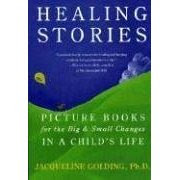
- Jacqueline Golding, Ph.D.
- Jacqueline Golding, Ph.D. is a psychologist in private practice in Pleasanton, California who works with children, teens, and adults. A graduate of Yale University, Dr. Golding earned her Ph.D. in psychology at the University of California, Los Angeles and completed a post-doctoral fellowship at the Central Contra Costa County Child, Adolescent, and Family Mental Health Service in Concord, California. She holds an appointment as Professor Emeritus at the University of California, San Francisco and has published over 100 articles in scientific and professional journals on topics such as trauma, depression, and cultural issues in mental health. Dr. Golding is represented by the Levine Greenberg Literary Agency.